|
WATER
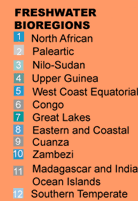
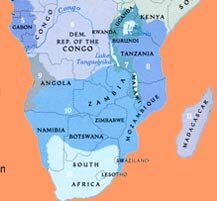
Freshwater bioregions, defined by groups of rivers and lakes, are among the most diverse and vulnerable areas. To the east is the Great Rift Valley which contains several lakes.
Major rivers like Congo and Niger support fish, birds, otters, and hippos. The Niger River is the Africas third longest river. It flows across western Africa to its delta in Nigeria. The Nigers water is used for irrigation and hydroelectric power and limited transportation because of many waterfalls and rapids.
Lakes have been evolving for more then 20 million years. Over-fishing, the introduction of exotic species, and pollution have wiped out half of the Lake Victorias 500 clichild species, a large part of diet of local people.
The Lake Victoria, lying on the Equator, is the second largest freshwater lake in the world.
Water is one of the world's most valuable resources. Although countries may enjoy significant amounts of rain, the water may be polluted or unsafe to drink. In many parts of Africa, less than 50% of the population has access to safe water. Lack of infrastructure and government regulation of the water supply keeps many Africans from getting clean water. As a result, millions of people die each year from waterrelated diseases such as cholera.
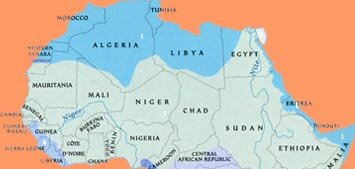
Water for crops and livestock is also scarce in many parts of the continent. Africa has three large deserts. The Sahara is the worlds largest desert and dominates the northern part of the continent. Thousands of years ago the Sahara had a moist climate. The Namib and Kalahari deserts cover huge areas of southwestern Africa. The Namib Desert is very barren and extremely dry.
|
|